How to reset your LinkedIn feed (and the algorithm behind it)
 Axel Schapmann7 min read
On this page
Can you reset the LinkedIn algorithm?
Not in one click. LinkedIn doesn't let you erase the activity it has collected, and there's no "start over" option anywhere in the settings. The feed you see is built from what LinkedIn tracks about your activity: the posts and articles you write, what you like and comment on, including in groups, plus the people, companies and interests you follow. On top of your network's posts, it adds recommended and sponsored content.
That leaves two ways to reset it:
- Switch off personalization with the Preferred Feed View setting. Instant, and the closest thing to a real reset.
- Retrain the default feed by removing what you don't want and sending better signals. Slower, but you keep LinkedIn's recommendations if you like discovering new people.
The 2-minute reset: switch your feed to Most recent
- Click Me at the top of LinkedIn, then Settings & Privacy.
- On Account preferences (it opens by default), click Preferred Feed View under General preferences.
- Select Most recent posts. It saves automatically.
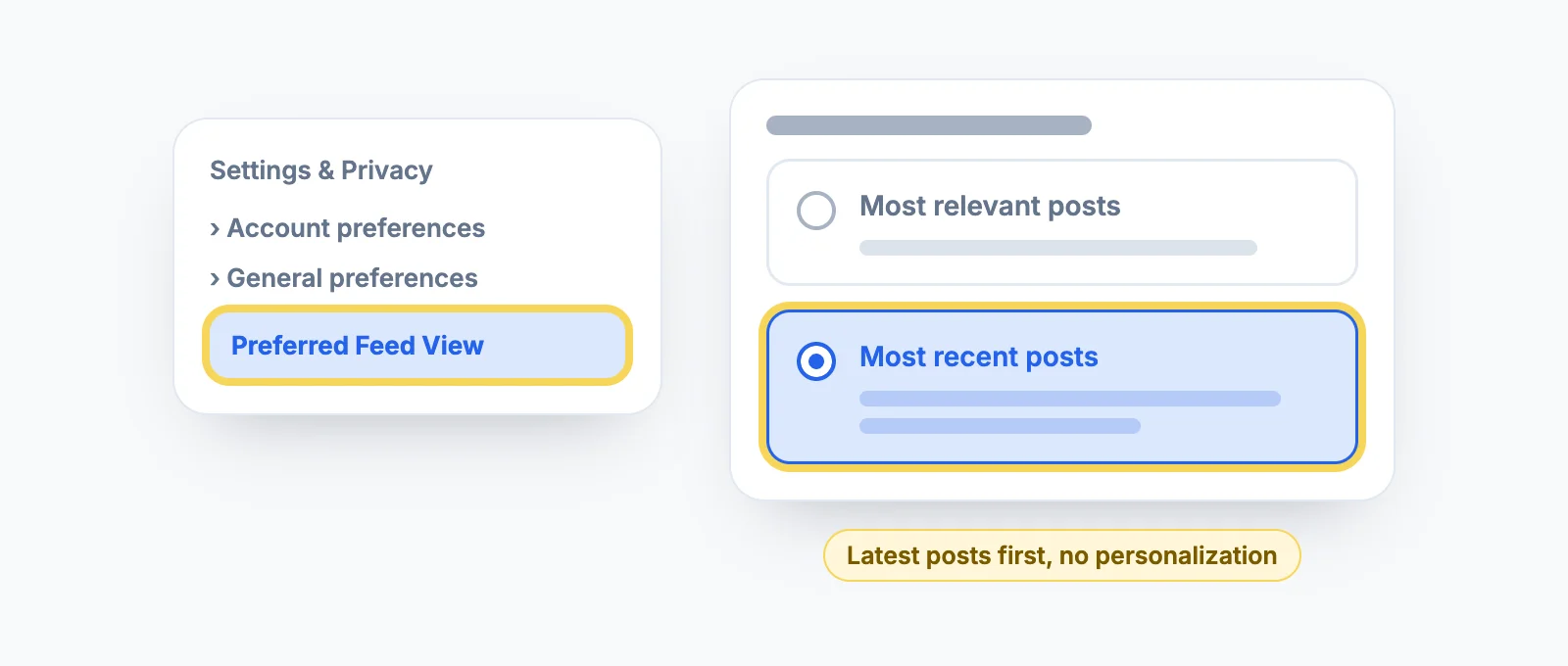
According to LinkedIn Help, with Most recent posts you see the latest posts first, only from people you follow, and your interests and activity data aren't used to sort the feed or make recommendations. What you get depends on where you are: in the European Economic Area you see all updates from your network in reverse chronological order, elsewhere you see the updates most relevant to you, still in reverse chronological order.
Two things it doesn't change: the ads you see (those follow your advertising preferences) and who you follow. If your network is full of people you don't want to read, a chronological feed just shows you their posts in order. That's what the next section fixes.
To try it without committing, use the Sort by dropdown right above your feed and pick Recent. LinkedIn only offers that sort on desktop.
Clean out what you don't want to see
LinkedIn's post menu gives you three levels of cleanup, all from the More icon (three dots) at the top right of a post:
| You want to | Click | What it does |
|---|---|---|
| Get rid of one post | Not interested | Removes it and may be used to improve future recommendations |
| See fewer posts from one author | Hide posts by [name] | Reduces content from that person, Page or company |
| Stop seeing someone entirely | Unfollow [name] | Their posts leave your feed, you stay connected |
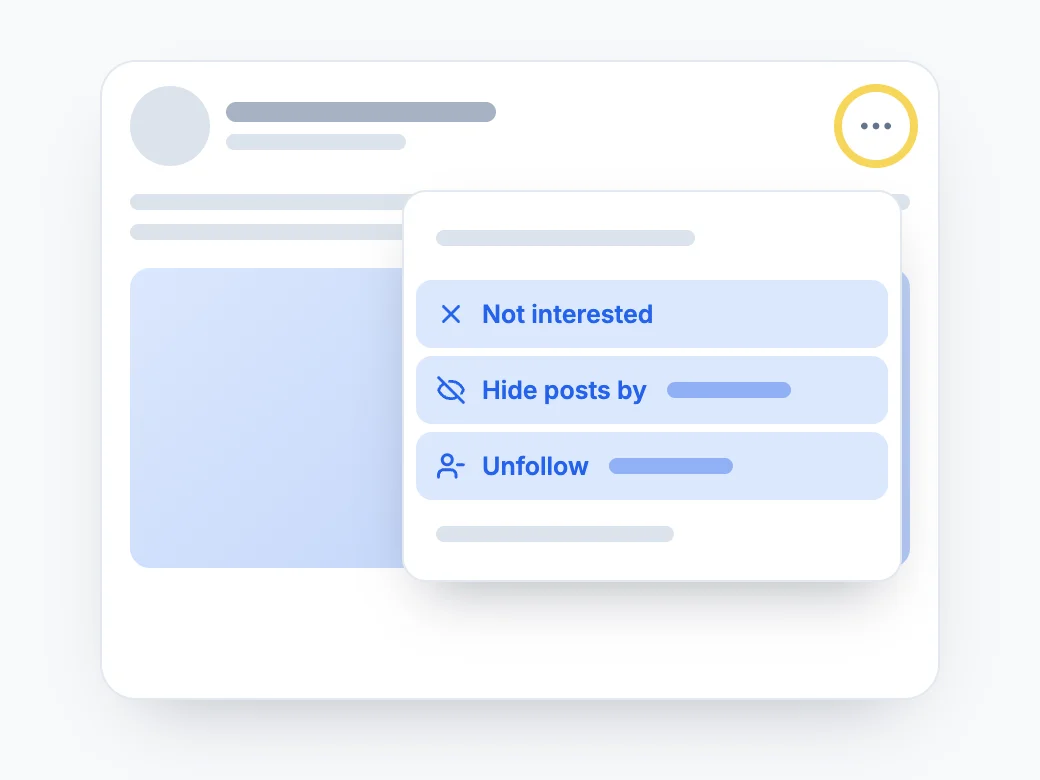
None of these notify the author, and hiding a post doesn't report it. LinkedIn also lets you mute people and companies. For the details on unfollowing, including the one move that does notify people, see does unfollowing someone on LinkedIn notify them.
To clean up faster than one post at a time, open the list of everyone you follow: My Network > Following & followers > Following, then click Following next to each account you want to drop. Company Pages you followed years ago for a job search are usually the first to go.
If some of the noise reaches you by email or push notification rather than in the feed, that's a separate setting: here's how to stop LinkedIn emails.
Retrain the algorithm with better signals
Removing noise only tells LinkedIn what you don't want. It also needs to learn what you do want, and it learns from what you do.
- Follow people worth reading. LinkedIn suggests sources on the Following & followers page, but a better list comes from the comments of posts you already value: the people with sharp replies usually post well too.
- Comment on the posts you want more of. LinkedIn uses your comments, not just your likes, to decide what to show you, and commenting is the habit that builds a network anyway. Here's how to write comments that get noticed.
- Stop rewarding what you don't want. Liking a post to be polite, or reacting to one you disagree with, still counts as interest.
- Watch your group activity. Posts, comments and likes in LinkedIn Groups shape your main feed too.
A 7-day LinkedIn feed detox
If you'd rather keep the default feed, this plan retrains it in a week, about 15 minutes a day.
Days 1 and 2: clear out. Scroll your feed and, for every post that doesn't belong, use Not interested, Hide posts or Unfollow. Then go through your Following list and drop Company Pages and people you no longer read. Aim for 50 unfollows and 20 hidden posts.
Days 3 and 4: add good sources. Follow 15 to 20 people in your field who share specifics: case studies, numbers, honest takes. Leave a real comment on two or three of their posts.
Days 5 and 6: reinforce. Keep hiding what slips through. Reply to the conversations you started. Skip anything you'd only open out of curiosity or annoyance.
Day 7: check and adjust. Your feed should show fewer strangers and more of the people you picked. Hide or unfollow whatever still doesn't fit, and keep the 15-minute habit instead of long scrolling sessions.
Why a LinkedIn feed reset doesn't last
The default feed keeps testing new content on you: recommended posts, trending topics, people you've never heard of. Each one you react to pulls the feed back toward what you just cleaned out, so expect to redo a quick cleanup every few weeks.
The Most recent setting holds better, but it only works if your follow list is good, and nobody keeps a follow list of several hundred people clean. We explain the mechanics in more detail in why your LinkedIn feed is full of irrelevant posts.
If it's your post reach that dropped
Some people searching "reset LinkedIn algorithm" don't mean their feed at all: their own posts suddenly get fewer views, and they want the algorithm to give them a fresh start. That doesn't exist either. Reach depends on what you post, when, and how people react in the first hours, not on a reset. Here's how the LinkedIn algorithm works, with the usual rules tested on 40,000 posts.
Start with why your LinkedIn post got no views, then compare your formats against real data on which LinkedIn post formats perform best. To see which of your own posts held up and which didn't, MyFeedIn's LinkedIn analytics track impressions and engagement for every post over time.
A feed you don't have to reset
Resetting fights the algorithm. MyFeedIn's creator feeds skip it: you pick the people you want to read, group them into feeds by topic or goal, and see only their posts, in the order they were published. No recommended posts creeping back in, nothing to clean up next month.
FAQ
Can you reset the LinkedIn algorithm?
Not with one click. LinkedIn doesn't offer a way to erase the activity it uses to personalize your feed. You can switch your feed to Most recent posts, which stops LinkedIn from using your interests and activity to sort it, or retrain the default feed by hiding, unfollowing and engaging differently.
How do I make my LinkedIn feed show the most recent posts?
Click the Sort by dropdown above your feed and pick Recent. To make it permanent, go to Me > Settings & Privacy > Account preferences > Preferred Feed View and select Most recent posts. LinkedIn says sorting the feed is only available on desktop.
Why does my LinkedIn feed keep showing irrelevant posts?
Because the default feed mixes posts from your network with recommended and sponsored content, ranked by your past activity. Every like, comment and post you wrote, including in groups, feeds that ranking. Hiding posts with Not interested and unfollowing noisy accounts changes what it learns from.
Does hiding a post on LinkedIn notify the author?
No. LinkedIn doesn't notify members when you hide their post, and hiding a post doesn't report it. Unfollowing and muting don't send a notification either.
How long does it take to reset a LinkedIn feed?
The Most recent setting changes your feed immediately. Retraining the default feed by hiding, unfollowing and engaging differently usually shows a visible difference within a week of daily use.
Can I reset my LinkedIn feed on the mobile app?
You can hide posts, unfollow and mute from the app. LinkedIn says the Top or Recent sort is only available on desktop, and the feed preferences you change in the app also apply on desktop.