ShieldApp is shutting down and LinkedIn made sure of it
 Axel Schapmann6 min read
Shield, the best LinkedIn analytics tool of the last 7 years, is shutting down. LinkedIn pushed it out, and the message to every other tool is clear.
On this page
Shield is shutting down
ShieldApp, the LinkedIn analytics tool that thousands of creators have used for the last 7 years, is closing. The product didn't fail and the founders aren't moving on to something new. LinkedIn and Google made it impossible to keep operating.
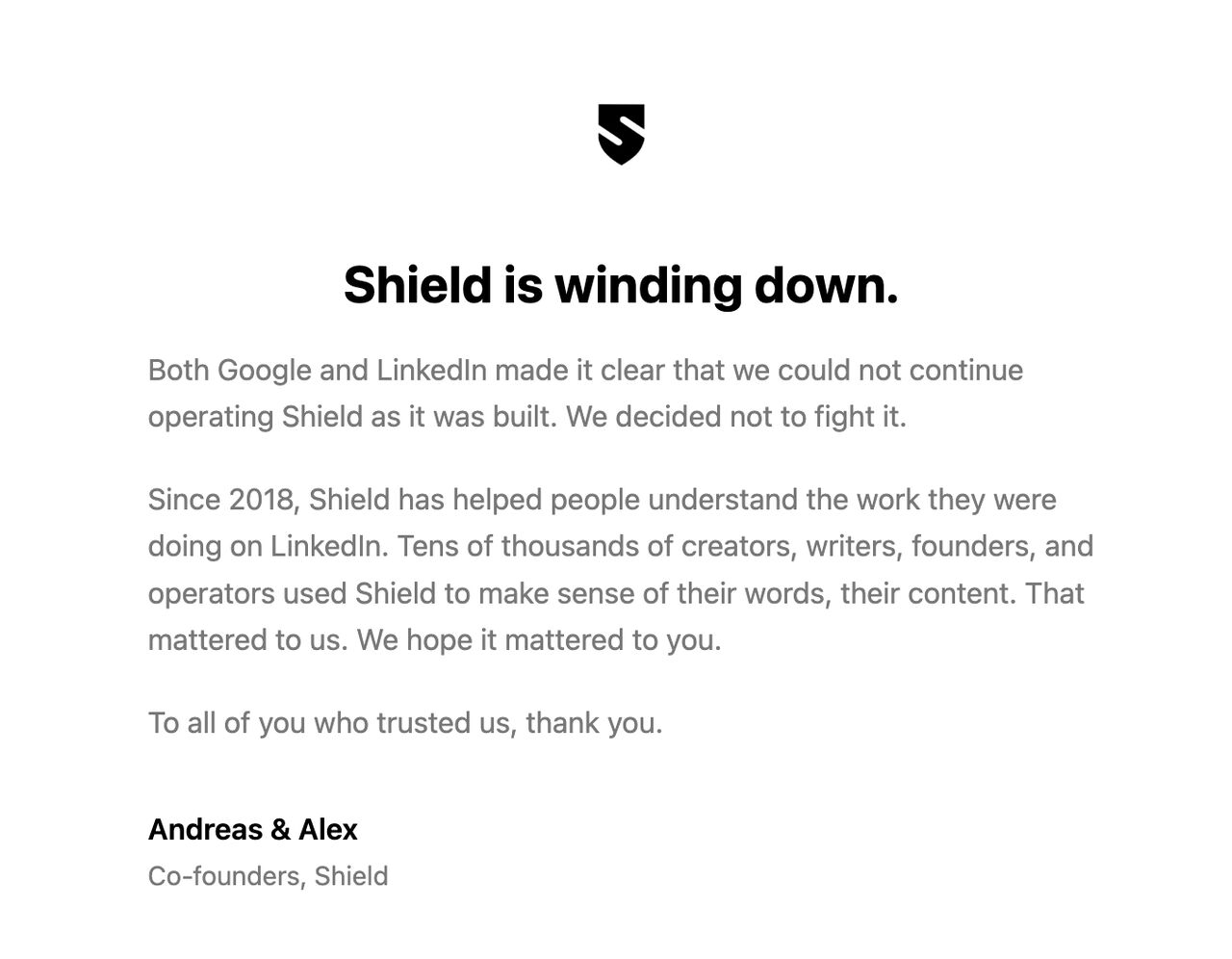
Here is what co-founders Andreas and Alex wrote in their announcement:
"Both Google and LinkedIn made it clear that we could not continue operating Shield as it was built."
Why Shield is actually shutting down
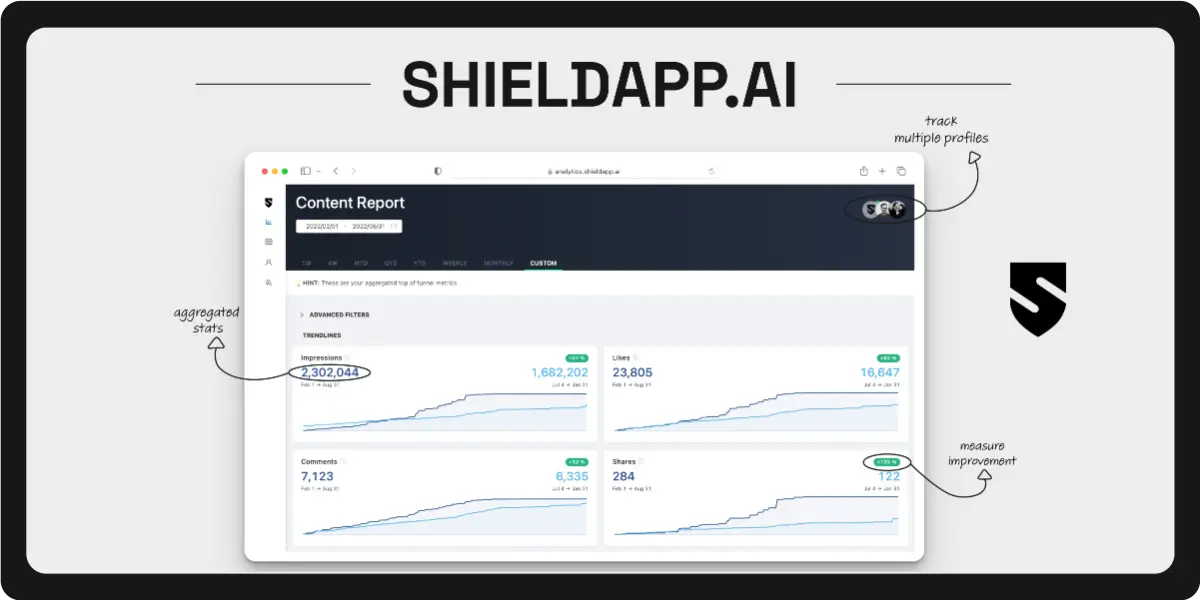
Shield wasn't a scam tool. It wasn't scraping connections or spamming inboxes. It read your own LinkedIn data and gave you the analytics LinkedIn refuses to provide: impressions over months and years, engagement breakdowns by post format, audience demographics, post history sorting, AI insights into your own content.
For 7 years, this was Shield's only job: tell LinkedIn creators what was actually working.
Then the pressure came. The same playbook LinkedIn already ran against Apollo, Seamless.AI, and other tools sitting on top of its platform. A mix of LinkedIn policy enforcement and Chrome Web Store pressure made Shield's technical setup unviable. Andreas and Alex chose to close rather than fight a war they couldn't win.
LinkedIn shuts down tools it should be copying
LinkedIn aggressively shuts down third-party tools that improve the LinkedIn experience. At the same time, its own product is full of obvious gaps that those exact tools were fixing.
Look at what LinkedIn natively gives you:
Analytics. A barely-useful dashboard with limited history, no real audience demographics, no comparison views, no AI. Shield was selling this for $12/month. LinkedIn could ship it in a week and never has.
The feed. Algorithmic noise. Posts from people you don't follow. Ads disguised as content. Comments from strangers shown before posts from people you actually care about.
Notifications. Mostly irrelevant, mostly designed to pull you back into the app.
Search. Inconsistent, capped, slow.
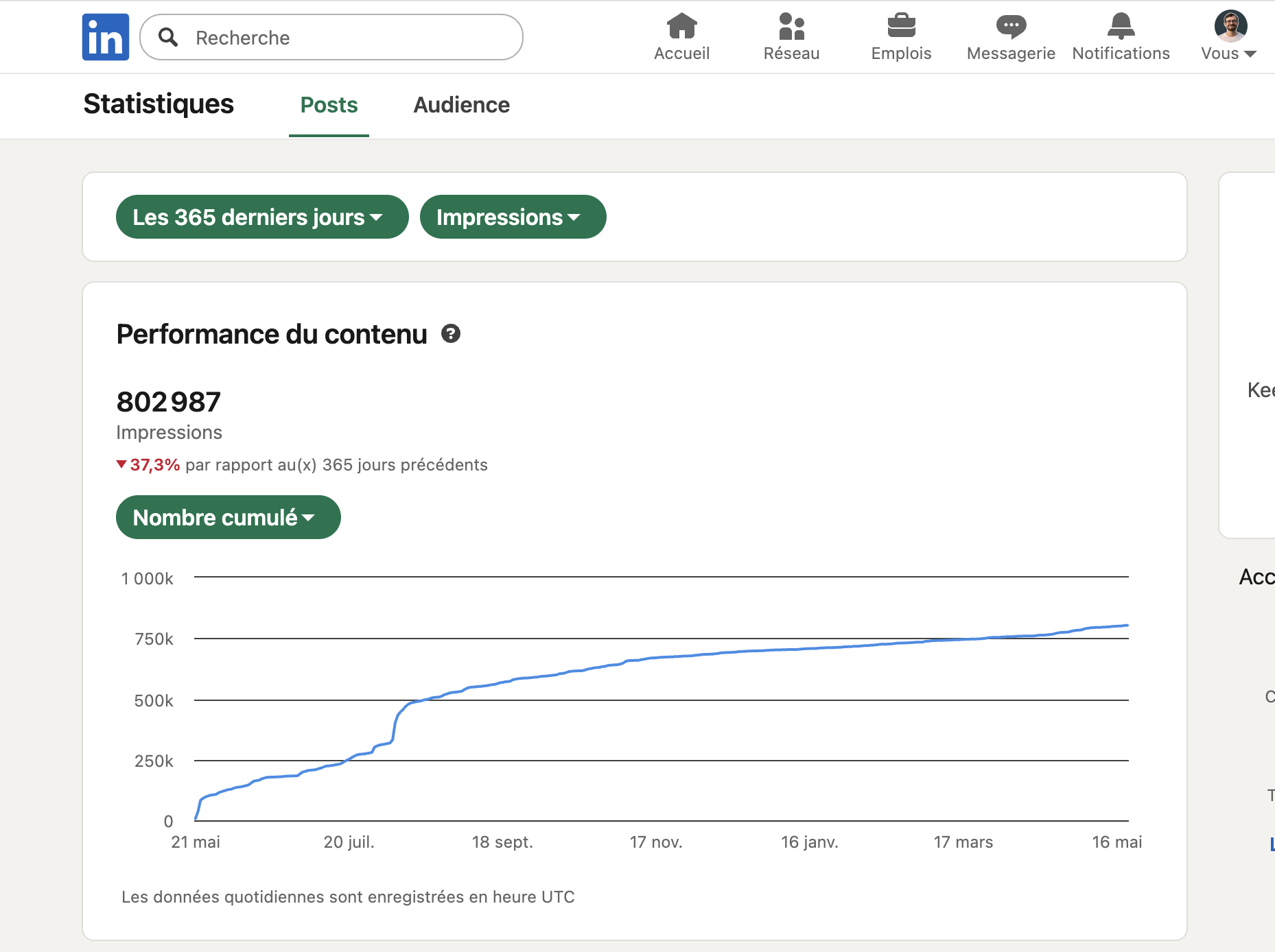
Users have been asking for better analytics, better feeds, and better search for years. LinkedIn's answer is to leave the product where it is and push out the people building around it.
Third-party tools exist because LinkedIn doesn't ship what users want. Killing those tools doesn't fix anything for users. It just removes the workaround and leaves the original problem in place.
Users pay for this
Every Shield user who built their content strategy around it now has two options: rebuild the workflow in a new tool, or fall back to LinkedIn's native analytics. Neither option gives you what you had.
The pattern is the same across the platform. You can't properly analyze your own content. You can't fix your own feed. You can't customize how you spend your time on LinkedIn. The version of LinkedIn you get is the version LinkedIn decides to ship, and right now that version is mediocre on every axis that matters to a serious user.
What to do if you're a Shield user
If you have a Shield account, export your data this week.
Download CSV exports of your post history. Screenshot the dashboards you actually use. Save the engagement trends and audience breakdowns. LinkedIn's native analytics will not give you that historical depth back.
When tools shut down under platform pressure, data access tends to disappear faster than the public timeline suggests. Don't wait.
For replacements, the realistic options are below, and we keep a fuller ranking with current pricing on the best LinkedIn analytics tools.
AuthoredUp is the closest one-to-one Shield alternative. It backfills historical data without centralizing LinkedIn cookies, which is part of why it's still standing.
Taplio is broader: analytics, AI writing, scheduling, lead database. More expensive, but if you want a single tool for everything content-related, it covers more ground.
Supergrow is a cheaper bundle of similar features.
MyFeedIn does post analytics and engagement tracking similar to Shield, plus the feed curation side. Free Chrome extension.
None of these are Shield. Shield was the best at one specific thing, and that thing is now gone.
Where MyFeedIn fits in this
When I saw the Shield announcement, the first thing I thought was: that could be us. We do similar things at MyFeedIn, including the analytics side.
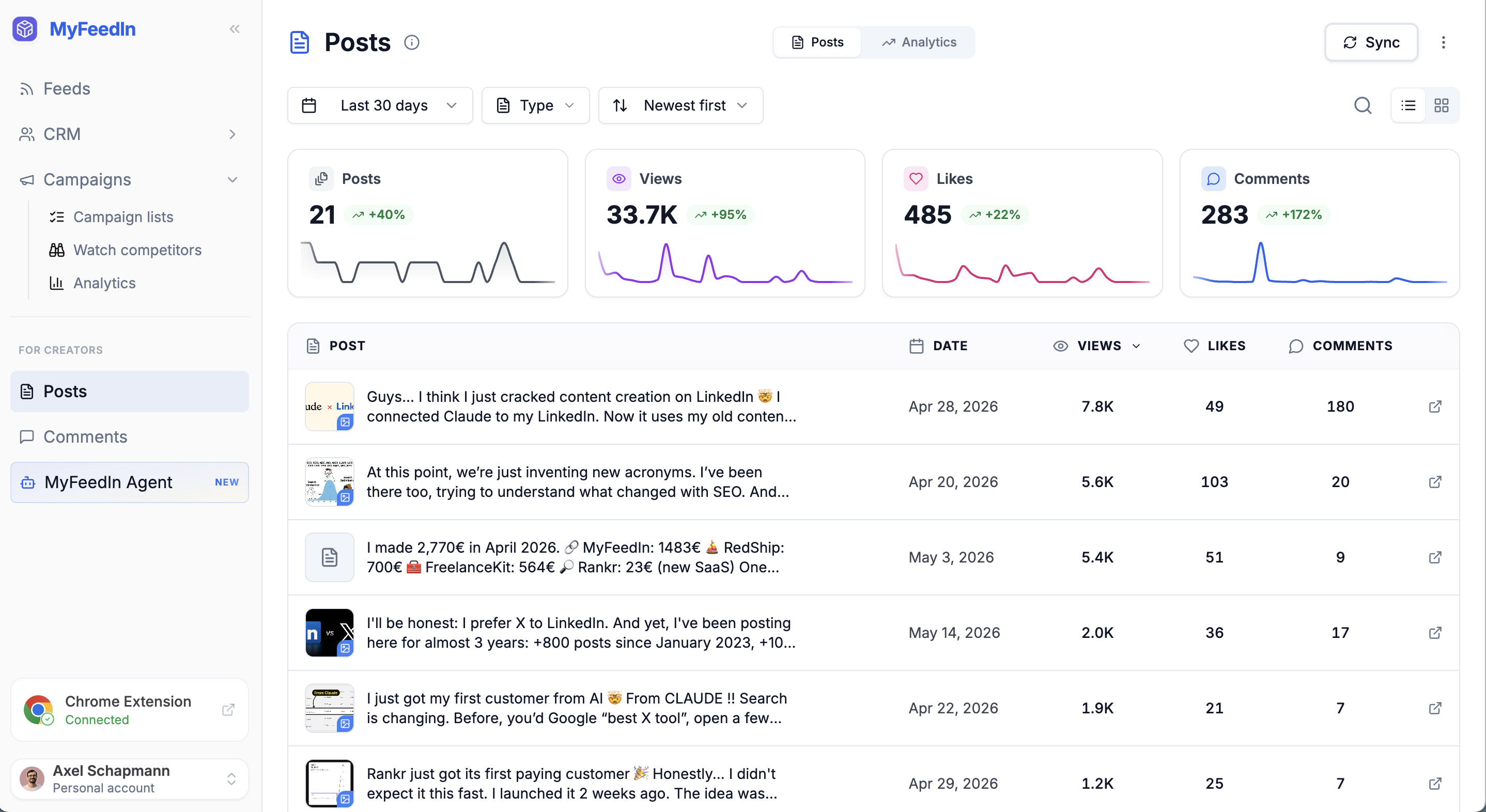
I've been building MyFeedIn for almost 2 years now, and building a LinkedIn tool is a daily fight against LinkedIn itself. There's always a new restriction or policy change that makes it harder to help creators.
The automation side, mass scraping, all of that should be blocked. That's fine. But why make it this hard to build tools that genuinely help creators? Better analytics, better feed control, better ways to engage with the people who actually matter to you. None of that hurts LinkedIn. It just makes the platform more useful.
Every tool in this space spends half its time playing cat-and-mouse with policy changes that have nothing to do with abuse.
Honestly, I don't know what the future of MyFeedIn will be. Maybe one day LinkedIn pushes hard enough and I shut it down too. That's the reality of building on top of a platform that doesn't want you there.
But this is exactly why I started building MyFeedIn in the first place: to solve my own frustration with LinkedIn as a creator and as a user. As long as those frustrations exist, I'll keep building.
Respect to Andreas, Alex, and the Shield team for what they built. 7 years is a long run. I hope MyFeedIn gets to stay alive that long.
The bottom line
Shield shutting down is the predictable result of a platform that prefers to control its ecosystem over fixing its own product. Export your Shield data, pick a replacement that fits how you actually work, and assume the broader squeeze on third-party LinkedIn tools is going to continue.
If MyFeedIn sounds like a fit, you can try it here. The Shield vs MyFeedIn comparison goes into more detail.